Resurrection, Ascension, the Spirit, and the Kingdom
The Holy One would not see corruption; He would ascend on high and sit at the right hand; the Spirit would be poured out on all flesh; and the nations would stream to the mountain of the Lord's house — the fifty days from Easter to Pentecost, and the Church that followed, foretold.
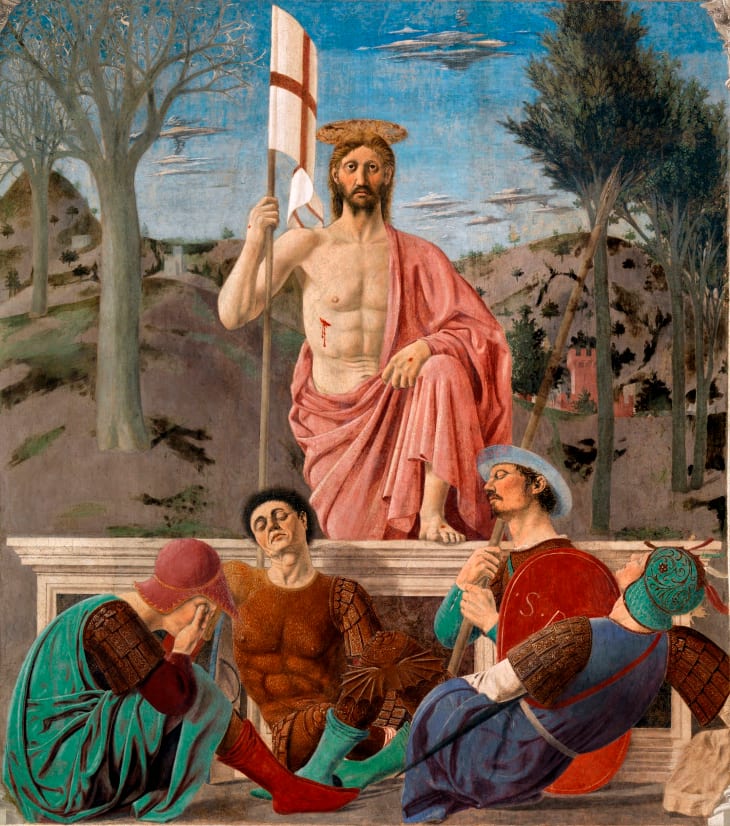
David sang that God would not abandon his Holy One to Sheol nor let him see decay (Psalm 16:10); Peter at Pentecost and Paul at Antioch argued that David's tomb was still occupied, so the psalm spoke of Christ, raised before his flesh could corrupt.
Hosea's 'on the third day he will raise us up' and Jonah's three days in the fish were read by Jesus himself as the pattern of his burial and resurrection 'according to the Scriptures.'
After his soul is made a guilt-offering and he is cut off from the land of the living, Isaiah's Servant 'shall see his seed, he shall prolong his days' and 'see the light' — the Servant lives again after dying; the apostles proclaimed the crucified one 'the author of life', whom death could not hold.
Psalm 2's enthronement decree, 'Thou art my Son, this day have I begotten thee', is applied by Paul to the day God raised Jesus up, and by Hebrews to his exaltation above the angels and his high-priestly appointment.
Psalm 22 turns from the Passion to praise in the assembly — 'I will declare thy name to my brethren'; Hebrews puts the verse on the lips of the risen Christ, who on Easter morning sent word 'go tell my brethren.'
God promised to make David's heir 'my firstborn, the highest of the kings of the earth', and the Law's first-fruits sheaf was waved 'on the morrow after the Sabbath'; Christ rose on that morning as 'the firstborn of the dead, the prince of the kings of the earth' and 'the first-fruits of them that sleep.'
The psalmist's 'thou hast led captivity captive' and Zechariah's 'by the blood of thy covenant I have sent forth thy prisoners out of the pit' are read with Ezekiel's opened graves as Christ's descent among the dead on Holy Saturday, freeing the just who awaited him.
Isaiah promised God would 'swallow up death for ever', Hosea taunted 'O death, where is thy sting?', and Genesis foretold the crushing of the serpent's head; by dying and rising Christ 'destroyed him who had the power of death' and 'abolished death.'
Daniel, Isaiah, Ezekiel, Job, and the Maccabean martyrs looked to a day when 'many that sleep in the dust shall awake' and 'thy dead shall live'; Jesus taught that all in the graves will hear his voice, and Christ's own rising is its first-fruits and pledge.
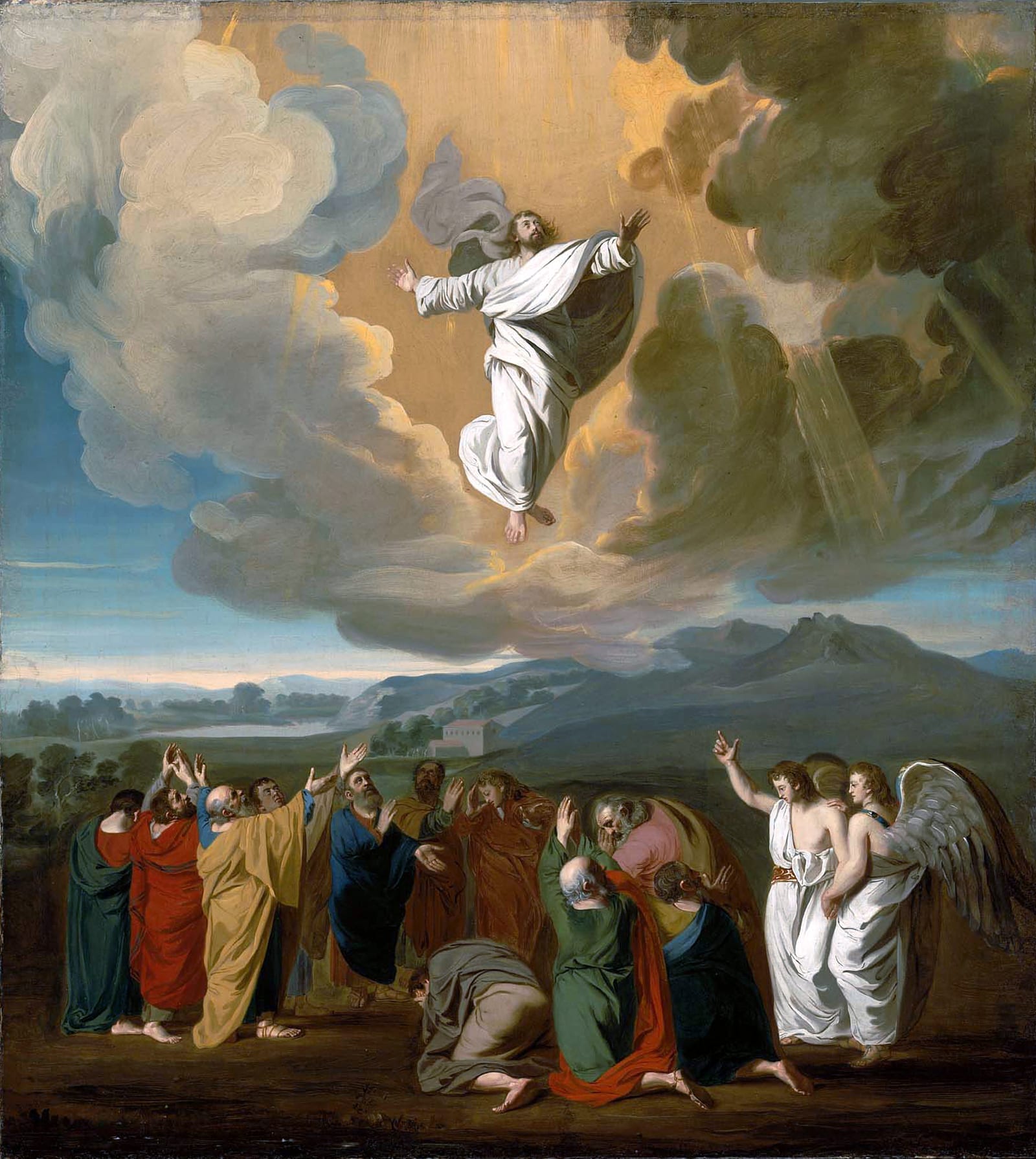
Psalm 68's 'thou hast ascended on high' and Daniel's Son of Man coming with the clouds to receive an everlasting kingdom are heaven's side of the Ascension, when a cloud received him out of the apostles' sight; the liturgy adds 'lift up your heads, O gates, that the King of Glory may enter' and 'God is gone up with a shout.'
'The LORD said to my Lord: Sit at my right hand' — the Old Testament verse most quoted in the New — was claimed by Jesus before Caiaphas and proclaimed by Peter at Pentecost of the exalted Christ, who now sits at the Father's right hand interceding until every enemy is subdued.
Psalm 8's son of man, crowned with glory and honour with everything under his feet, is fulfilled in the risen Jesus, exalted above every power and made head over all things for the Church — though 'not yet do we see all things subject to him.'
Hebrews 1 strings together the psalms of the Son's enthronement: 'Thy throne, O God, is for ever', 'God hath anointed thee above thy fellows', 'Thou remainest... thy years shall not fail', and 'let all the angels of God worship him' — all fulfilled when the Father brought the risen Firstborn into his heavenly glory.
The oath 'Thou art a priest for ever according to the order of Melchizedek', Zechariah's Branch who is 'a priest upon his throne', and the Servant who 'made intercession for the transgressors' are fulfilled in Christ, who after his ascension exercises an unending priesthood at the Father's right hand.
God swore through Isaiah that 'every knee shall bow to me, every tongue shall swear'; Paul applies the oath to the exalted Jesus, given the name above every name.
The oracle to Eliakim — 'the key of the house of David I will lay upon his shoulder; he shall open and none shall shut' — is claimed in Revelation by the risen Christ, who holds the keys of death and of the kingdom he entrusts to Peter.
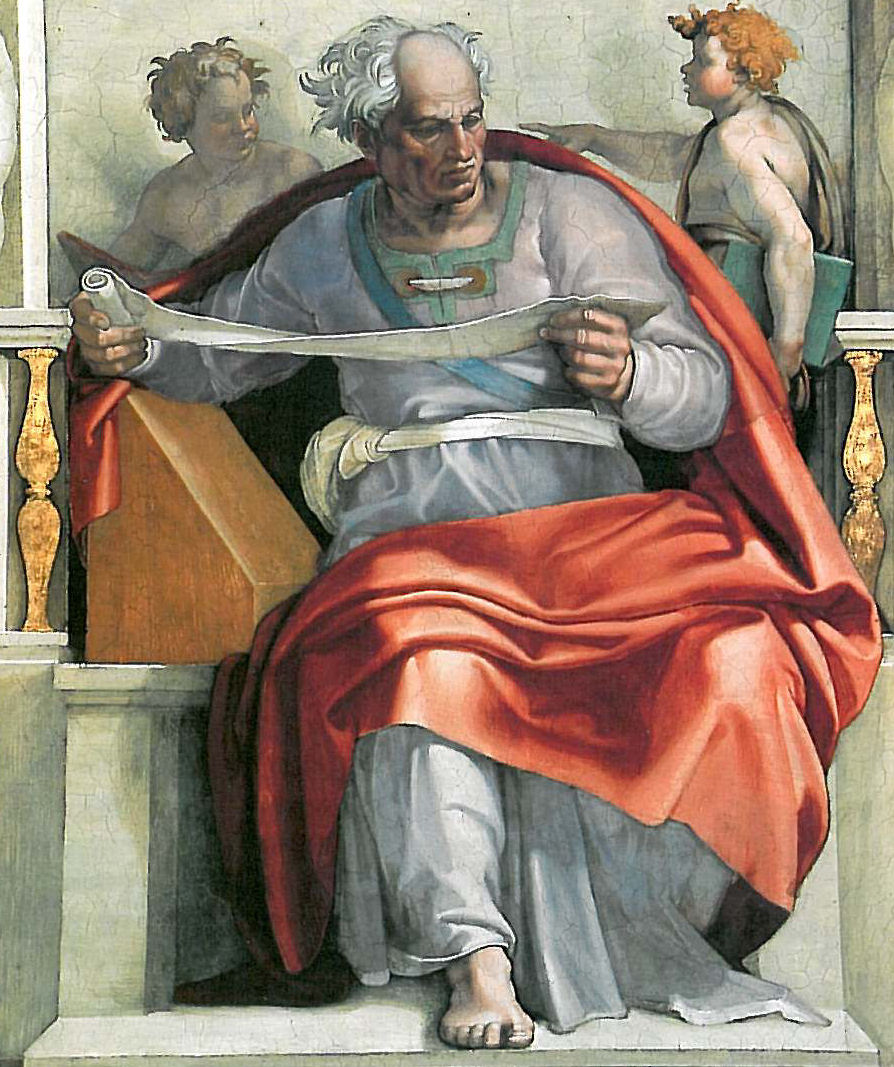
Joel promised that afterward God would pour out his Spirit on all flesh, sons and daughters prophesying, and that whoever calls on the name of the Lord would be saved; Peter declared at Pentecost, 'This is that which was spoken by the prophet Joel.'
Jeremiah foretold a new covenant unlike Sinai's, God's law written on the heart, sins remembered no more, all knowing the Lord 'from the least to the greatest'; Jesus named the chalice 'the new covenant in my blood', and Hebrews quotes Jeremiah in full as fulfilled.
Ezekiel promised clean water sprinkled, a heart of flesh for a heart of stone, and 'I will put my Spirit within you'; the Church reads this of baptism and the indwelling Spirit by which Christians walk in God's statutes.
Isaiah's 'with stammering lips and another tongue will he speak to this people' is cited by Paul as the scriptural basis of the gift of tongues, and Zephaniah's 'pure lip' given to the peoples, that all may call on the Lord's name together, was read by the Fathers in the Pentecost crowd hearing one gospel in every language.
Ezekiel, Jeremiah, and Isaiah promised 'an everlasting covenant... my tabernacle shall be with them', the 'sure mercies of David'; Paul reads 'I will dwell in them' of the Church as God's temple, Hebrews names 'the blood of the everlasting covenant', and Acts applies Isaiah 55:3 to the resurrection.
Isaiah saw the Root of Jesse standing as a banner for the peoples, the nations seeking him and the scattered gathered from the four corners of the earth; Paul closes his catena on Gentile salvation with the verse, and Jesus 'lifted up' draws all to himself.
The Servant was appointed 'a covenant of the people, a light of the Gentiles' so that 'all the ends of the earth shall see the salvation of our God'; Simeon sang it over the infant, and Paul and Barnabas invoked it when they turned to the Gentiles.
Isaiah's 'the Gentiles shall walk in thy light, and kings in the brightness of thy rising' and the psalmists' kings of Tarshish and Sheba bringing gifts were inaugurated by the Magi and are consummated when the kings of the earth bring their glory into the new Jerusalem.
'Ask of me, and I will give thee the Gentiles for thine inheritance' and 'he shall have dominion from sea to sea... unto the ends of the earth' are fulfilled in the risen Christ's 'all power is given to me; go, teach all nations.'
Malachi foretold that God would reject the Temple's offerings and instead receive 'in every place' a pure oblation from the rising of the sun to its setting; from the Didache to the Council of Trent the Church has read this of the Eucharist, the one sacrifice of Christ offered on every altar.
'My name shall be great among the Gentiles' and 'all nations shall come and adore before thee' are fulfilled as God takes from the Gentiles 'a people for his name' and the Church's song in Revelation proclaims that all nations come to worship.
Amos promised God would raise up the fallen tent of David 'that the residue of men may seek the Lord, and all the Gentiles upon whom my name is called'; James cited it at the Council of Jerusalem to justify receiving Gentiles without circumcision.
Hosea's reversal — 'where it was said, You are not my people, they shall be called sons of the living God' — together with Moses' 'I will provoke you to jealousy by a no-people... rejoice, O Gentiles, with his people' and Isaiah's 'I was found by them that sought me not', are applied by Paul and Peter to the calling of the Gentiles into the Church.
Isaiah foresaw foreigners joined to the Lord in 'a house of prayer for all peoples' and 'others gathered besides those already gathered', and Ezekiel one shepherd over a single flock; Jesus cleansed the Temple with the words and declared, 'Other sheep I have... there shall be one fold and one shepherd.'
Isaiah's closing oracle gathers 'all nations and tongues', sends survivors to the far coastlands to declare God's glory, and ends 'I will take of them for priests and Levites'; Paul calls his Gentile ministry a priestly service and Peter names the baptized 'a royal priesthood.'
Daniel's kingdom set up by the God of heaven that 'shall stand for ever', Isaiah's throne of David established 'from henceforth and for ever', and Nathan's oracle to David are echoed word for word by Gabriel to Mary: 'of his kingdom there shall be no end.'
In Nebuchadnezzar's dream a stone 'cut out of the mountain without hands' shattered the kingdoms and grew into a mountain filling the earth; Jesus alluded to it ('on whomsoever it shall fall, it will grind him to powder'), and the mustard seed and leaven describe the same growth of the kingdom he founded.
Isaiah and Micah saw the mountain of the Lord's house exalted, all nations streaming to it, and the word going forth from Jerusalem; the gospel went out 'beginning at Jerusalem', Hebrews tells Christians 'you are come to Mount Zion', and Paul names the barren woman's many children the Church, 'the Jerusalem above, our mother.'
Daniel saw judgment given to the saints of the Most High and the kingdom under the whole heaven handed to them; Jesus gave his 'little flock' a kingdom, promised his apostles thrones, and Paul reminds the Church that 'the saints shall judge the world.'
On 'this mountain' Isaiah saw the Lord of hosts make a feast of rich food and fine wine for all peoples, and there swallow up death; Jesus promised that many would come from east and west to recline with Abraham, and Revelation calls the consummation the marriage supper of the Lamb.
Isaiah's new heavens and new earth, a Jerusalem of sapphire foundations whose gates never shut and whose light is the Lord, Ezekiel's river from the sanctuary with ever-fruiting trees, and Zechariah's living waters from Jerusalem are gathered in John's vision of the holy city coming down from God.
Daniel foretold that after the Anointed One is cut off 'the people of the prince that shall come shall destroy the city and the sanctuary', and Micah that Zion would be ploughed as a field; Jesus wept over the city and said not one stone would be left on another, fulfilled by Titus in AD 70.
Hosea foretold that Israel would abide 'many days without king, without prince, without sacrifice', and afterward return to seek the Lord and David their king; the Temple sacrifices ceased in AD 70, Jerusalem was 'trodden down by the Gentiles', and Paul awaits the day when 'all Israel shall be saved.'
Daniel's Son of Man coming with the clouds, Zechariah's 'they shall look on him whom they pierced' and 'his feet shall stand on the Mount of Olives... and all the saints with him', and 'the Lord shall be king over all the earth' describe the Second Coming which the angels promised would mirror the Ascension from that same hill.
The psalms sang that the Lord 'cometh to judge the earth... the world with righteousness', Daniel saw the court seated and the books opened, and Isaiah's Branch judges the poor with equity and slays the wicked with the breath of his lips; Paul at Athens quoted the psalm of the Man God appointed, proved by raising him from the dead.
Joel, Isaiah, Zephaniah, and Malachi describe the great and terrible Day — sun turned to darkness, stars falling like leaves, a furnace for the proud, a worm that dies not — which Jesus and the apostles place at his revelation from heaven in flaming fire.
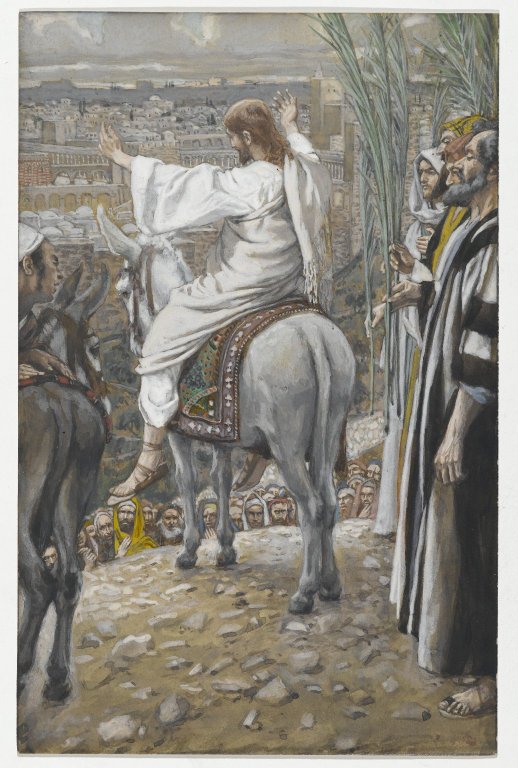
The Hallel's 'Blessed is he that cometh in the name of the Lord', sung on Palm Sunday, was turned by Jesus into a prophecy of his return: Jerusalem will not see him again until it greets him with that acclamation.