Betrayed by a familiar friend who ate his bread
The psalmist's close companion who shared his bread lifts his heel against him; Judas, one of the Twelve, dips in the dish with Jesus and betrays him with a kiss.
Foretold
Fulfilled
The densest cluster in all prophecy: the friend who lifted his heel, the thirty pieces of silver, the shepherd struck, and Psalm 22 with Isaiah 53 — written centuries before crucifixion existed — read beside the Passion accounts they describe.
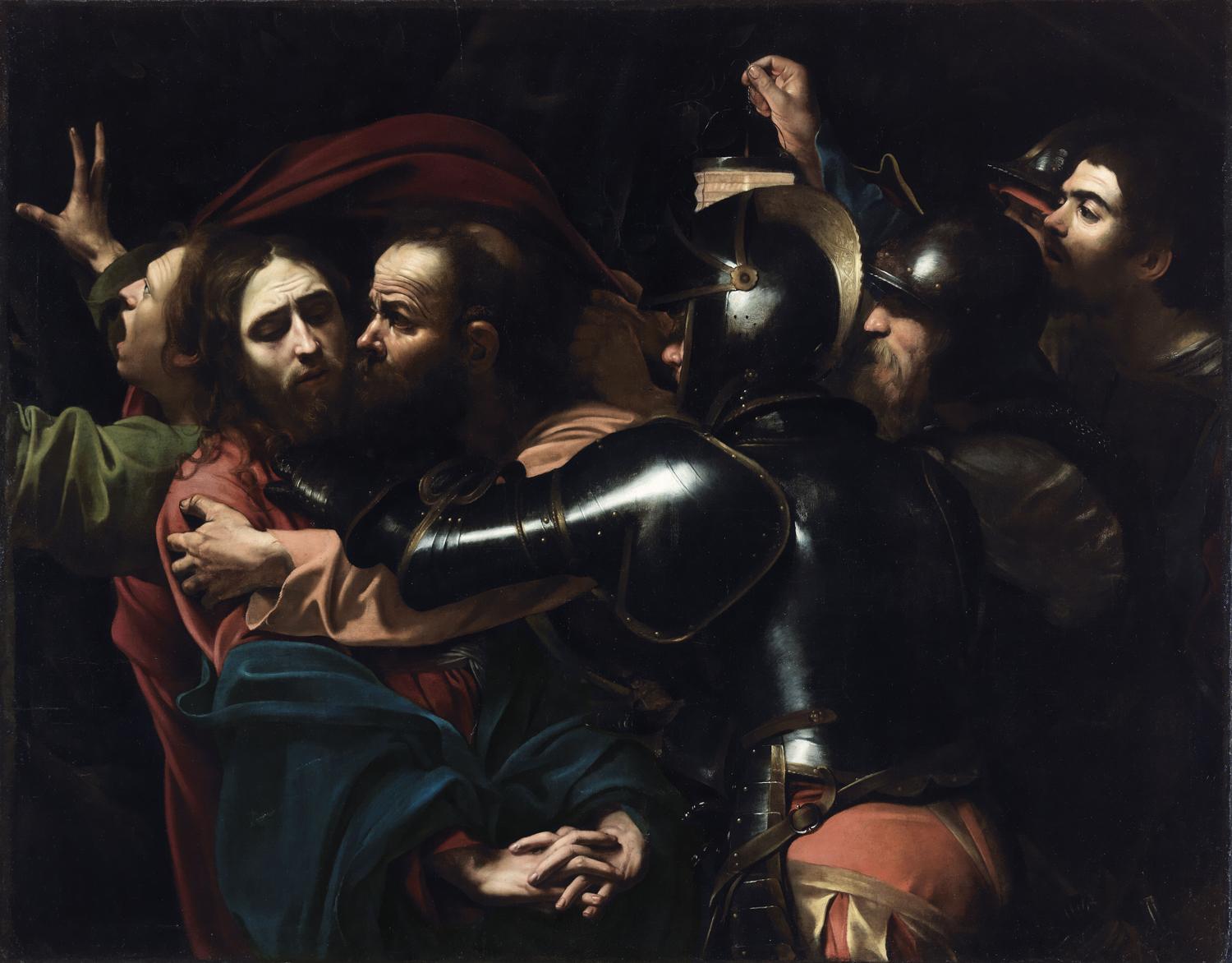
The psalmist's close companion who shared his bread lifts his heel against him; Judas, one of the Twelve, dips in the dish with Jesus and betrays him with a kiss.
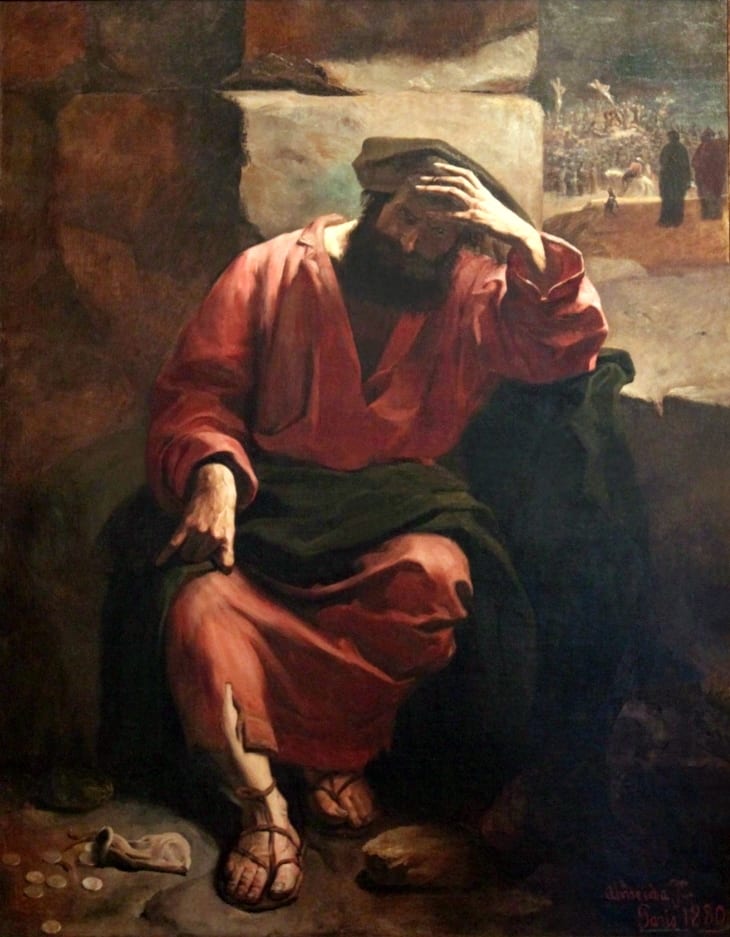
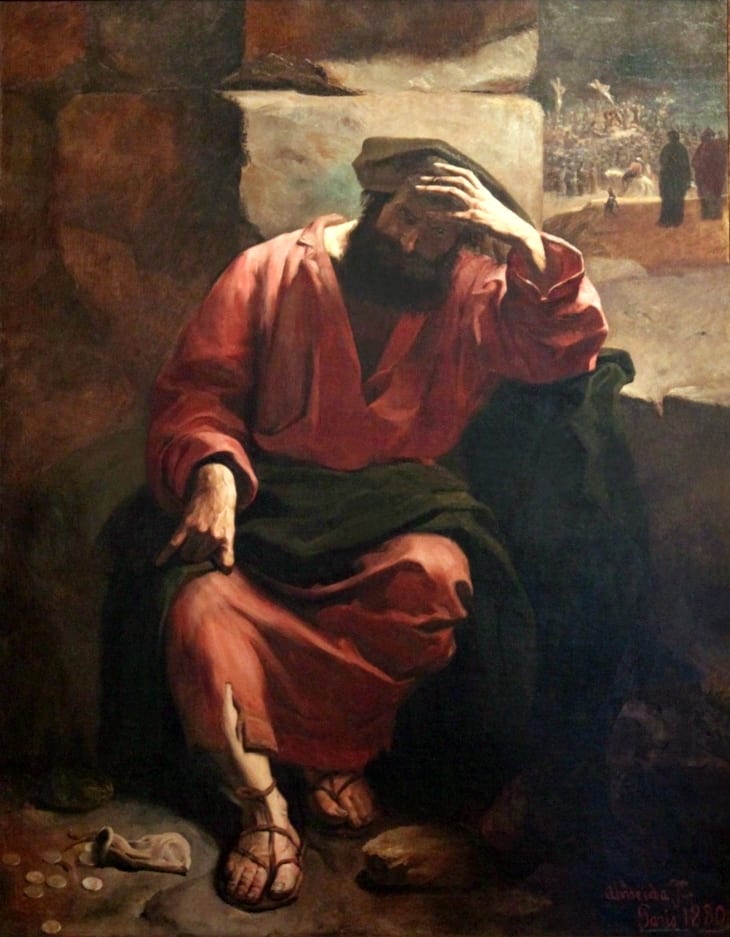
The rejected shepherd is valued at thirty shekels, which are thrown down in the house of the Lord for the potter; Judas is paid thirty silver pieces, flings them into the Temple, and the priests buy the potter's field.
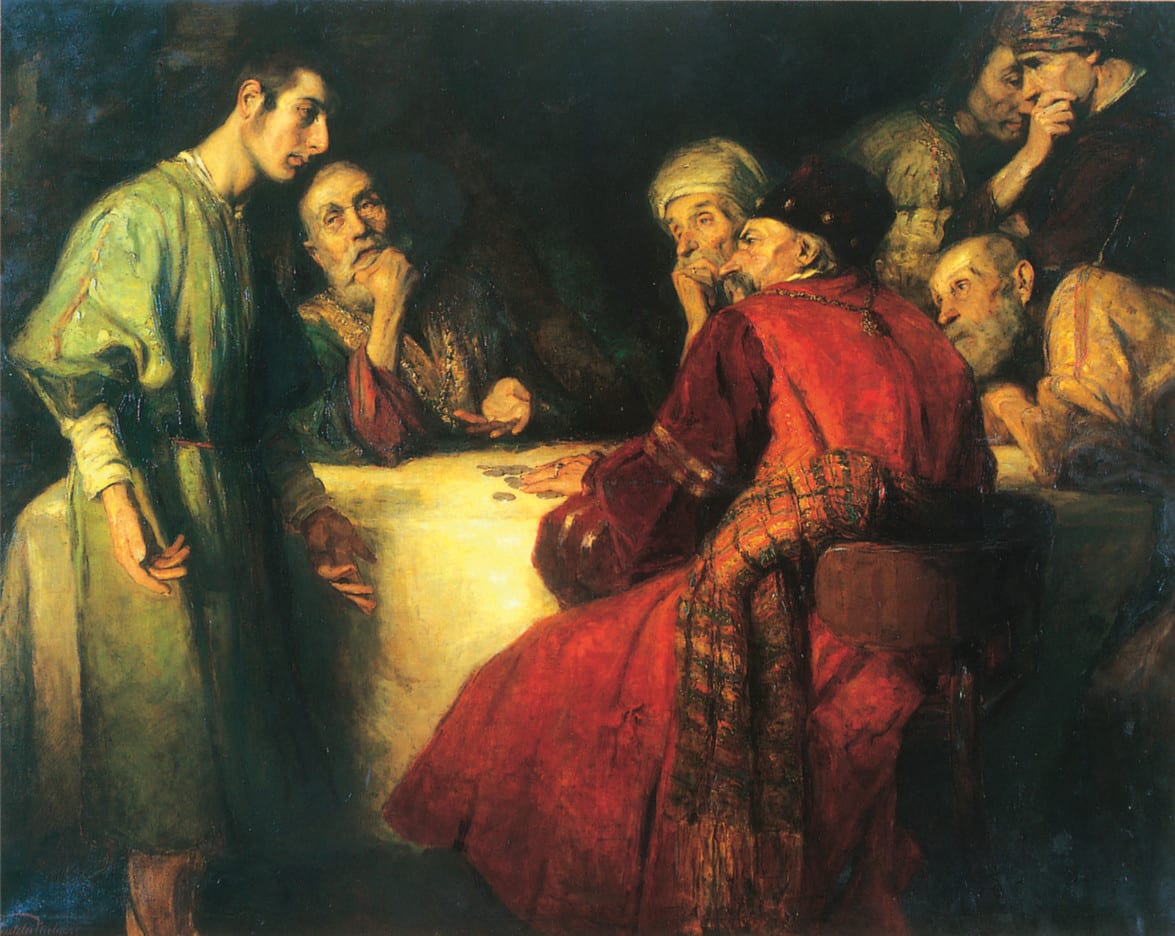
Judah proposes selling his brother Joseph for pieces of silver; the Fathers read this as a type of Judas selling Christ for silver.
The psalms pray that the enemy's dwelling be left desolate and that another take his office; Peter applies both to Judas's death, the field of blood, and the election of Matthias.
The sword awakes against God's shepherd, 'the man that is my fellow', and the flock scatters; Jesus quotes it on the way to Gethsemane and all the disciples flee at his arrest.
The psalmist's lovers, friends, and acquaintances stand aloof and far from his suffering; the disciples flee, and those who knew Jesus watch the crucifixion from a distance.
The nations rage and the rulers take counsel together against the Lord and his Christ; the apostles apply this to Herod, Pilate, the Gentiles, and the people of Israel gathered against Jesus.
The righteous sufferer is hated without cause by enemies more numerous than the hairs of his head; Jesus says this scripture is fulfilled in the world's hatred of him.
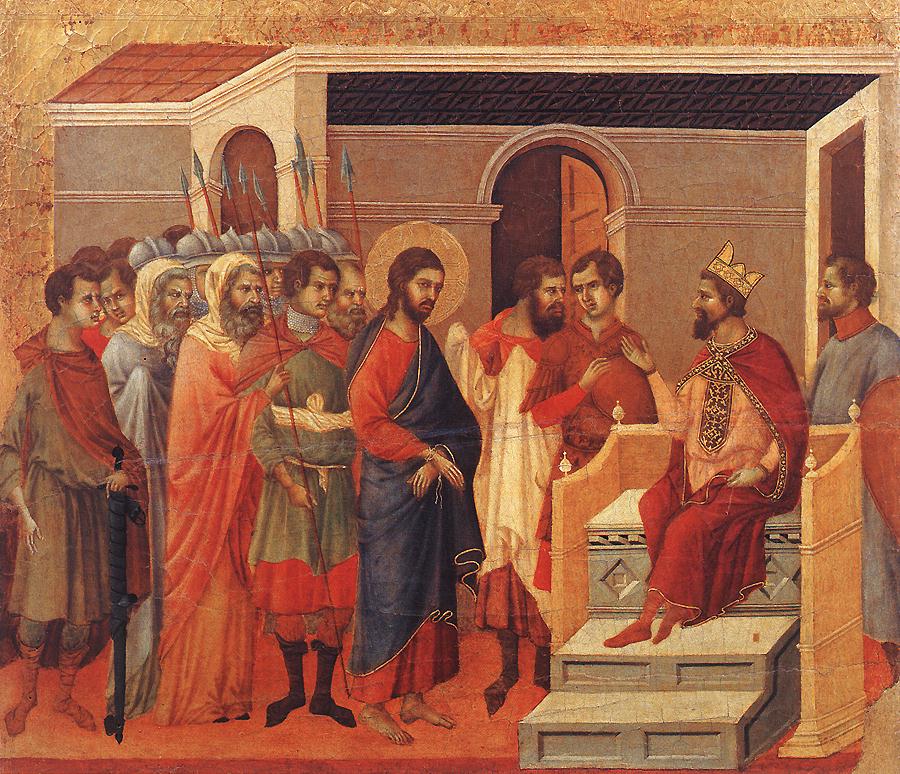
False witnesses rise up and lay to his charge things he knew not; at the Sanhedrin trial many false witnesses testify against Jesus and their testimony does not agree.
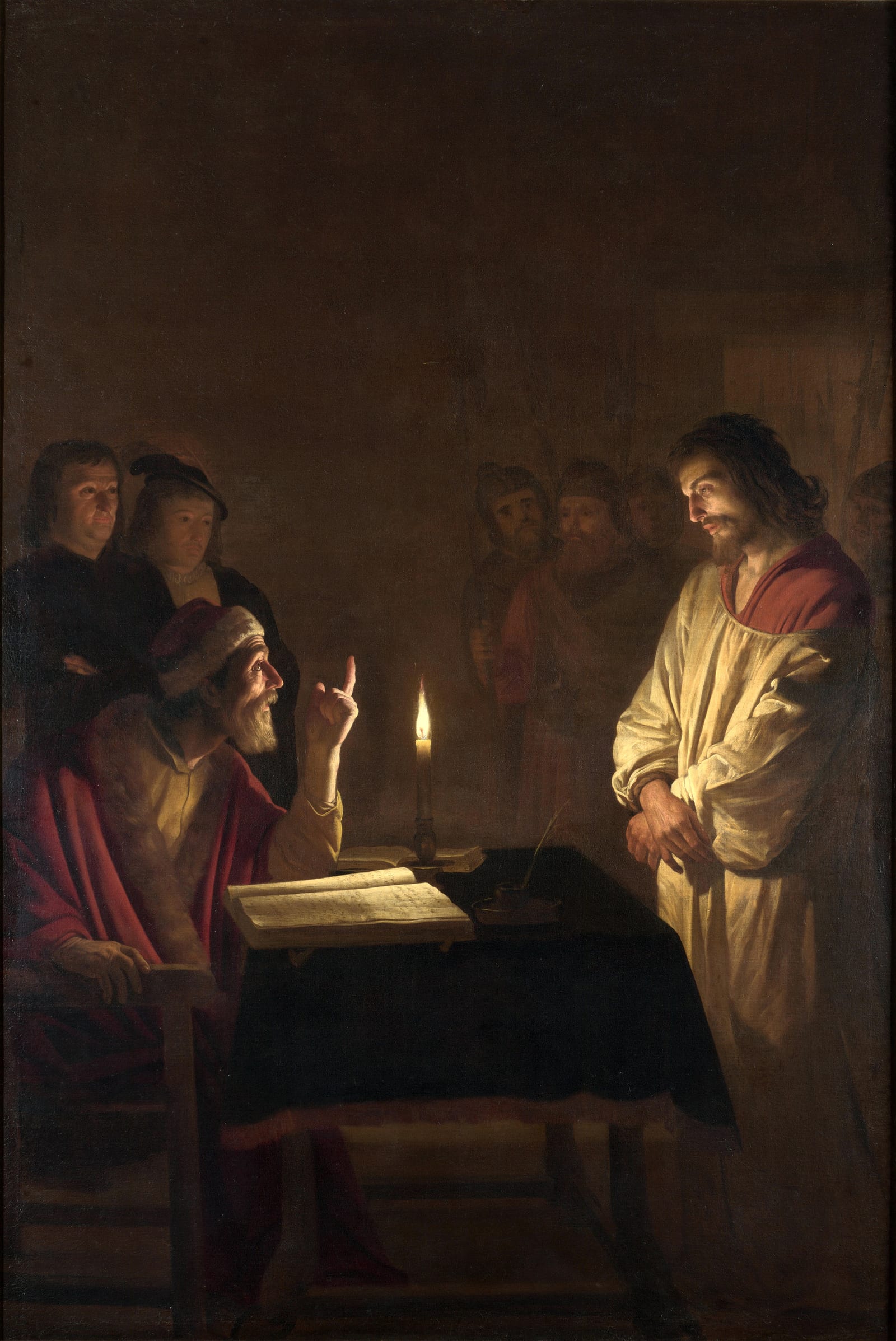
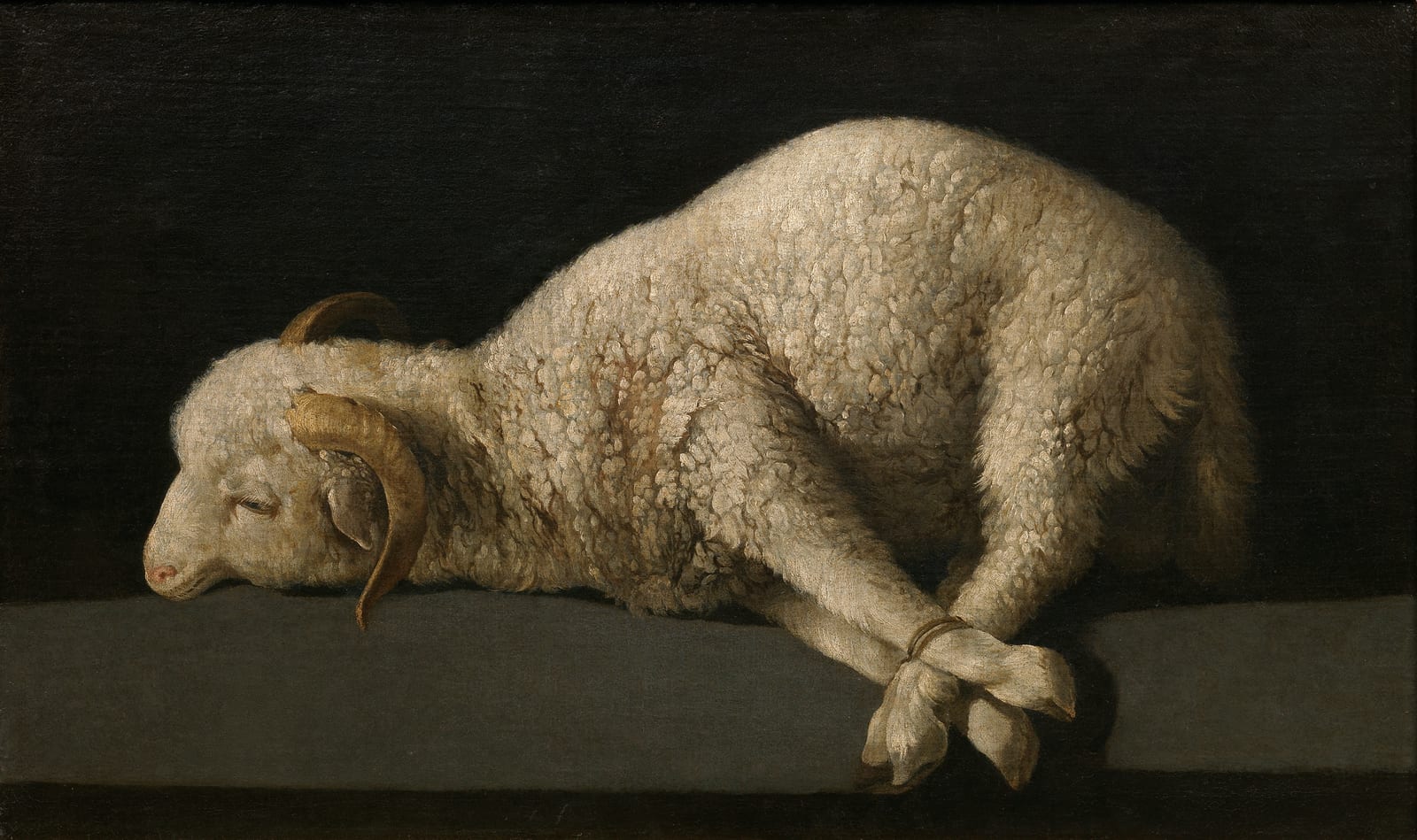
Oppressed and afflicted, he opened not his mouth, like a sheep dumb before its shearers; Jesus answers nothing to the chief priests, Pilate, and Herod.
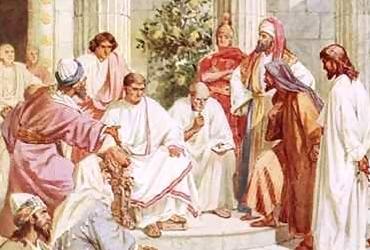
The wicked plot against the just man who calls himself God's son, resolving to test him with insult and torture and condemn him to a shameful death, saying God will deliver him if he is truly God's son; the mockery at the cross echoes it almost verbatim.
The Servant is despised and rejected, a man of sorrows from whom men hide their faces; the builders reject the cornerstone. The crowd chooses Barabbas and cries for Jesus' crucifixion.
The Servant gives his back to the smiters and his cheeks to those who pluck the beard, hiding not his face from shame and spitting; the judge of Israel is smitten on the cheek with a rod. Jesus is struck, blindfolded, spat upon, and beaten with a reed.
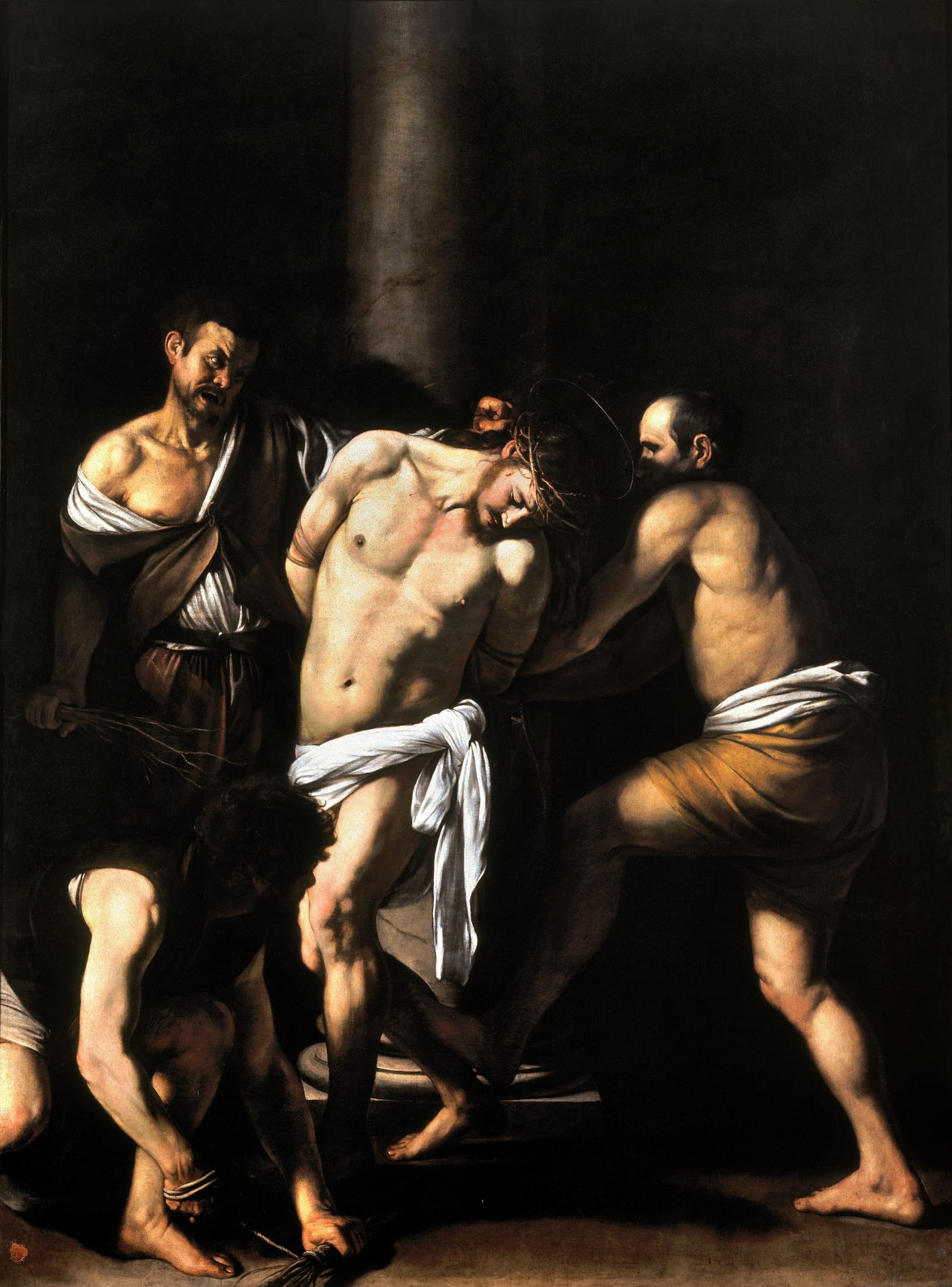
The Servant is wounded for our transgressions and by his stripes we are healed; 'the plowers plowed upon my back'. Pilate has Jesus scourged before handing him over.
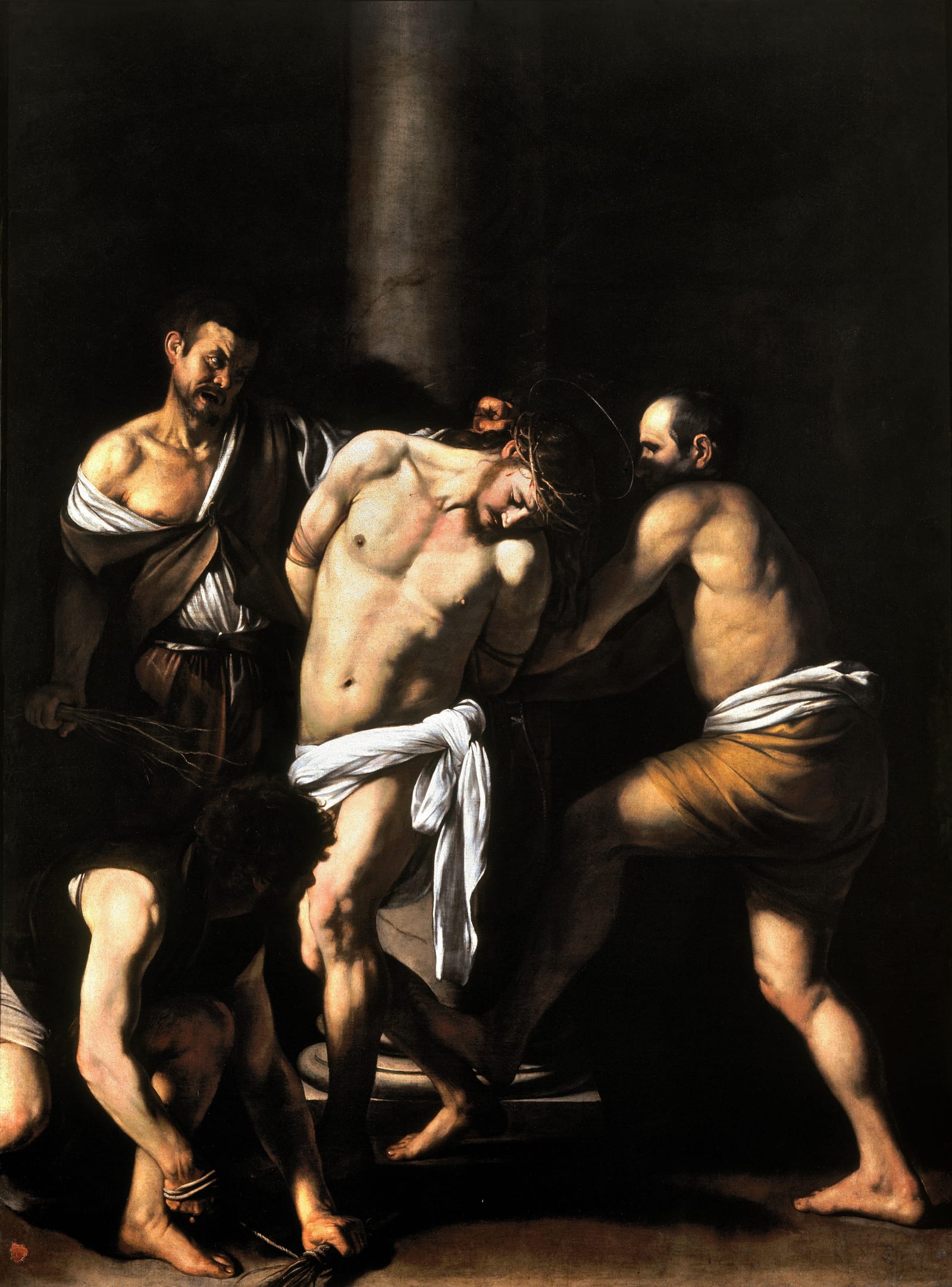
Many are appalled at the Servant, his face and form so disfigured beyond human semblance; after scourging and the crown of thorns Pilate presents the beaten Jesus with 'Behold the man'.
Thorns are the sign of the earth's curse after Adam's sin; the soldiers crown Jesus with thorns, and the Fathers read him as bearing the curse on his own head.
The Law declares that a man hanged on a tree is accursed of God and must not remain overnight; Paul says Christ became a curse for us by hanging on the tree, and the Jews ask that the bodies be taken down before the Sabbath.
Abraham's only beloved son carries the wood up the mountain to be offered, and is received back 'in a figure'; Jesus carries his cross to Golgotha, the Son whom the Father did not spare.
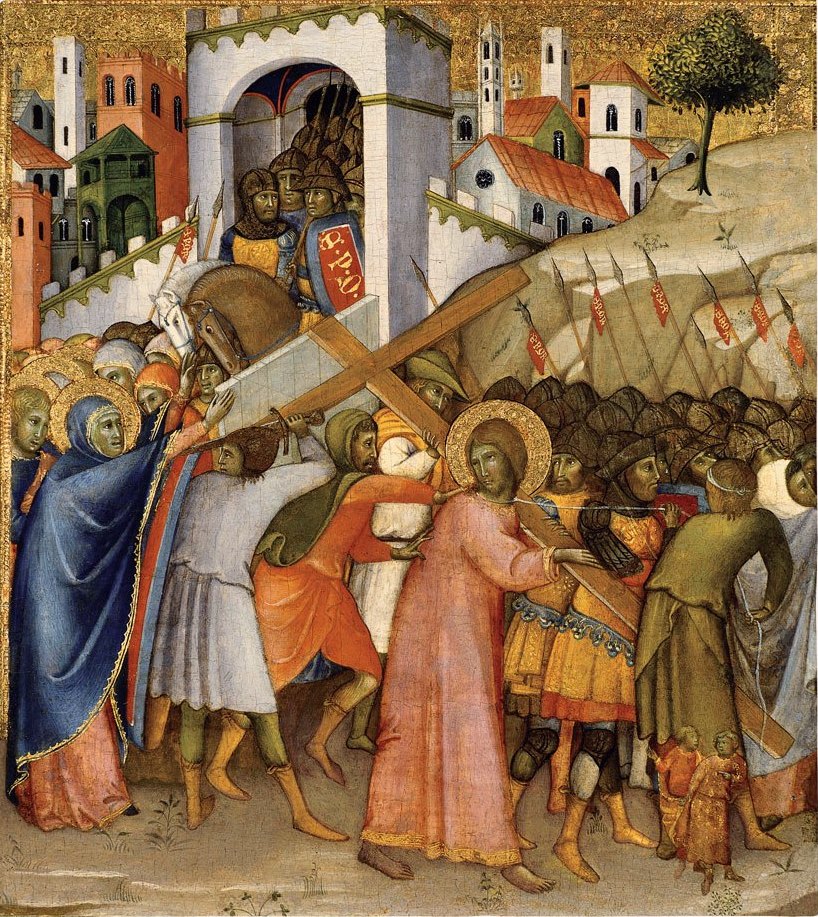
On Yom Kippur the sins of Israel are confessed onto the scapegoat which bears them away, and the sin-offering's body is burned outside the camp; Hebrews says Jesus, bearing our sins, suffered outside the gate and entered the true sanctuary with his own blood.
It pleased the Lord to bruise him, making his soul an offering for sin (Hebrew asham); the apostles teach that God made the sinless Christ to be sin for us, a sacrifice once for all.
The fourth Servant Song describes one despised, wounded for our transgressions, silent, cut off, buried with the rich, numbered with transgressors, and interceding for them; the New Testament applies the song to Jesus more than any other Old Testament text.
The Servant is brought as a lamb to the slaughter; Jeremiah, too, was 'like a lamb brought to the slaughter' while enemies plotted to 'destroy the tree with the fruit' and cut him off from the land of the living. John the Baptist hails Jesus as the Lamb of God.
A spotless male lamb is slain and its blood applied so that death passes over the house; Paul proclaims 'Christ our Passover is sacrificed for us' and Peter calls him a lamb without blemish.
The lambs were to be killed on the fourteenth of Nisan 'between the evenings'; John places the condemnation on the Preparation of the Passover, so that Jesus dies as the paschal lambs are slaughtered.
The Protoevangelium foretells that the serpent will bruise the heel of the woman's seed even as his head is crushed; the Passion is the serpent's hour, and through death Christ destroys him who had the power of death.
In the Lord's hand is a cup of red wine whose dregs the wicked must drink, and Jerusalem drinks 'the cup of his fury'; in Gethsemane Jesus prays that this cup may pass and then accepts it from the Father's hand.
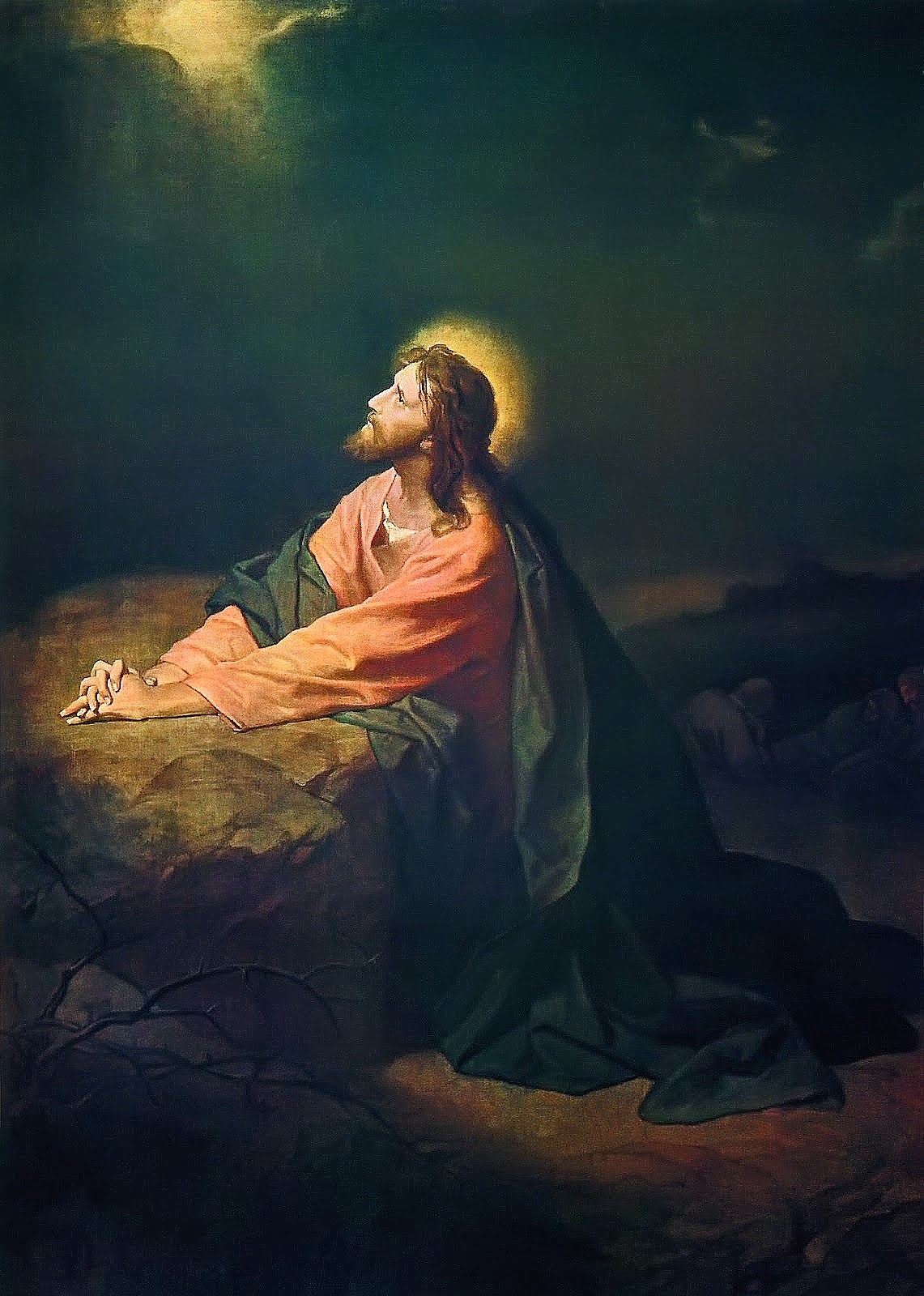
Reproach breaks the sufferer's heart, he looks for pity and comforters and finds none, no man cares for his soul, 'there was none to help'; in Gethsemane the disciples sleep and at the arrest all forsake him.
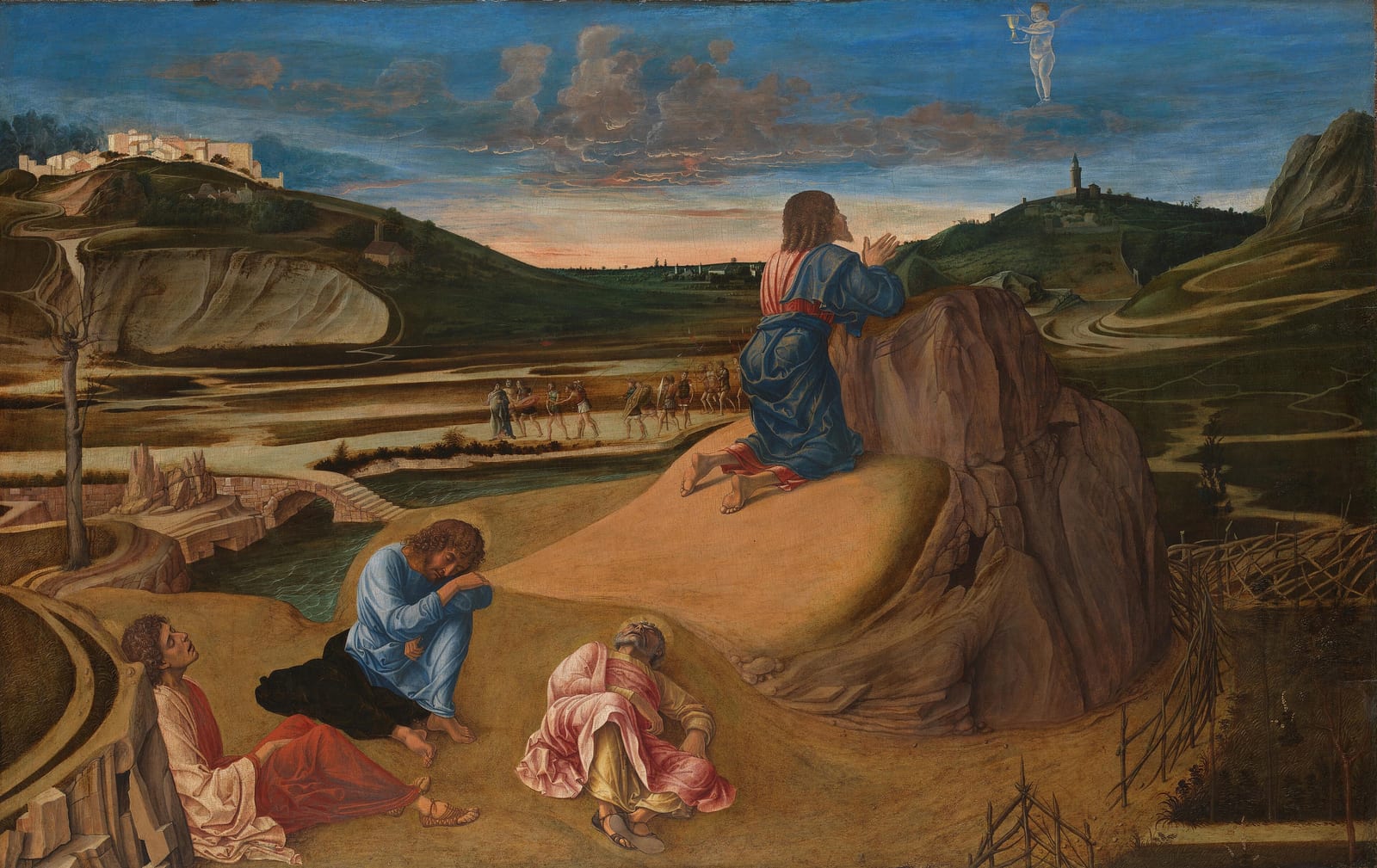
One comes from Edom with garments stained red, having trodden the winepress alone with none of the people beside him; tradition reads the solitary, blood-soaked treader as Christ in his Passion, from the bloody sweat of Gethsemane (the 'oil-press') to the cross.
The Servant is taken from prison and judgment, cut off out of the land of the living, stricken for the transgression of the people; Philip applies the verse to Jesus, condemned though Pilate found no fault in him.
After the sixty-two weeks the Anointed One is to be cut off, with nothing for himself, and afterwards the city and sanctuary destroyed; Jesus dies in the first century and foretells Jerusalem's destruction, which followed in A.D. 70.
The Servant is numbered with the transgressors and makes his grave with the wicked; Jesus, who himself says 'this must be fulfilled in me', is crucified between two robbers.
Dogs and an assembly of the wicked surround the sufferer and pierce his hands and feet; the risen Jesus shows the disciples the wounds in his hands and feet.
They part my garments among them and cast lots upon my vesture; the soldiers divide Jesus' clothes and cast lots for the seamless tunic, which John says happened that the scripture might be fulfilled.
Those who see him laugh him to scorn, shoot out the lip, shake the head, and say 'He trusted on the Lord; let him deliver him'; passers-by and rulers wag their heads and taunt the crucified Jesus in the same words.
The sufferer is a worm and no man, a reproach of men and despised of the people; Jesus is set at naught, robed in mockery, and reviled by rulers, soldiers, and even a crucified thief.
Strong bulls beset the sufferer and gape on him like a ravening and roaring lion; the chief priests, scribes, and elders surround the cross with open-mouthed derision.
The psalmist is poured out like water, his bones out of joint, his heart melted like wax; the Servant pours out his soul unto death. Tradition reads here the physical agony of crucifixion and the blood and water from the pierced heart.
Stretched so that his bones may be counted, he is stared at by onlookers; Jesus is stretched on the cross while the people stand beholding.
The sufferer's strength is dried like a potsherd and his tongue cleaves to his jaws in the dust of death; Jesus, knowing all is accomplished, says 'I thirst' so the scripture might be fulfilled.
They gave me gall for my meat and vinegar in my thirst; the soldiers offer Jesus wine mingled with gall before crucifixion and sour wine on a sponge at the end.
Hyssop applied the Passover lamb's blood to the doorposts and sprinkled the blood of cleansing; the sponge of vinegar is lifted to Jesus' lips on hyssop, which John alone records.
The opening cry of Psalm 22, the psalm of the pierced and mocked sufferer, is uttered by Jesus from the cross in Aramaic.
The psalmist commits his spirit into the Lord's hand; Jesus dies with these words on his lips, and Stephen echoes them.
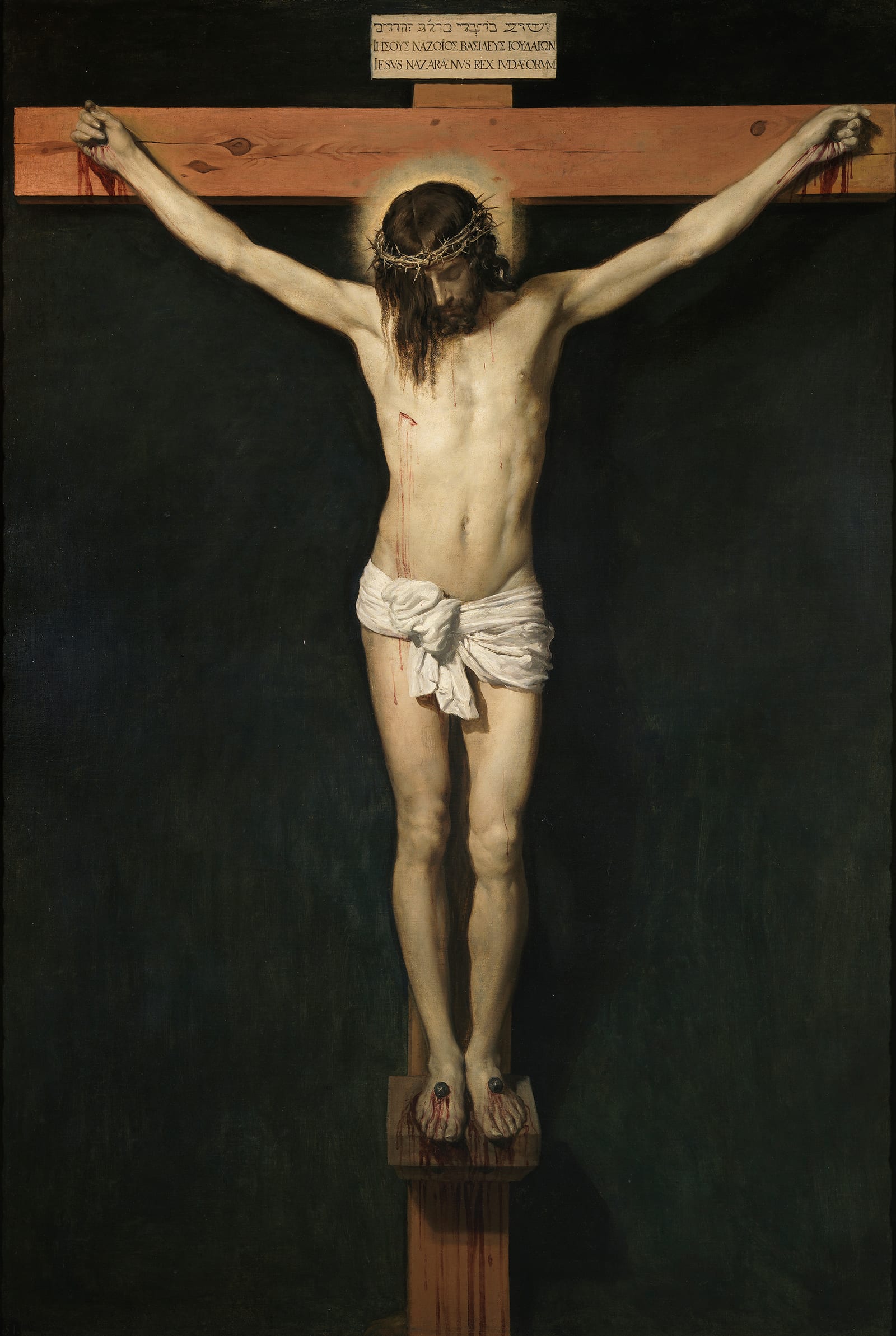
The Servant bears the sin of many and intercedes for the transgressors; 'for my love they are my adversaries, but I give myself unto prayer'. Jesus prays 'Father, forgive them' from the cross.
Zeal for God's house consumes the psalmist and the reproaches aimed at God fall on him; Paul applies the verse to Christ's self-denial in the Passion.
God will make the sun set at noon and darken the earth in clear day, with mourning as for an only son; darkness covers the land from the sixth to the ninth hour as Jesus hangs on the cross.
The veil shut off the Holy of Holies, which only the high priest entered once a year with blood; at Jesus' death it is torn from top to bottom, which Hebrews reads as the opening of the way into the true sanctuary through his flesh.
The prophets picture the earth shaking, mountains quaking, and rocks thrown down at the Lord's presence and wrath; at Jesus' death the earth quakes, rocks split, and tombs open, and the centurion confesses him Son of God.
No bone of the Passover lamb was to be broken, and the Lord keeps all the bones of the righteous; the soldiers break the legs of the two thieves but, finding Jesus dead, do not break his.
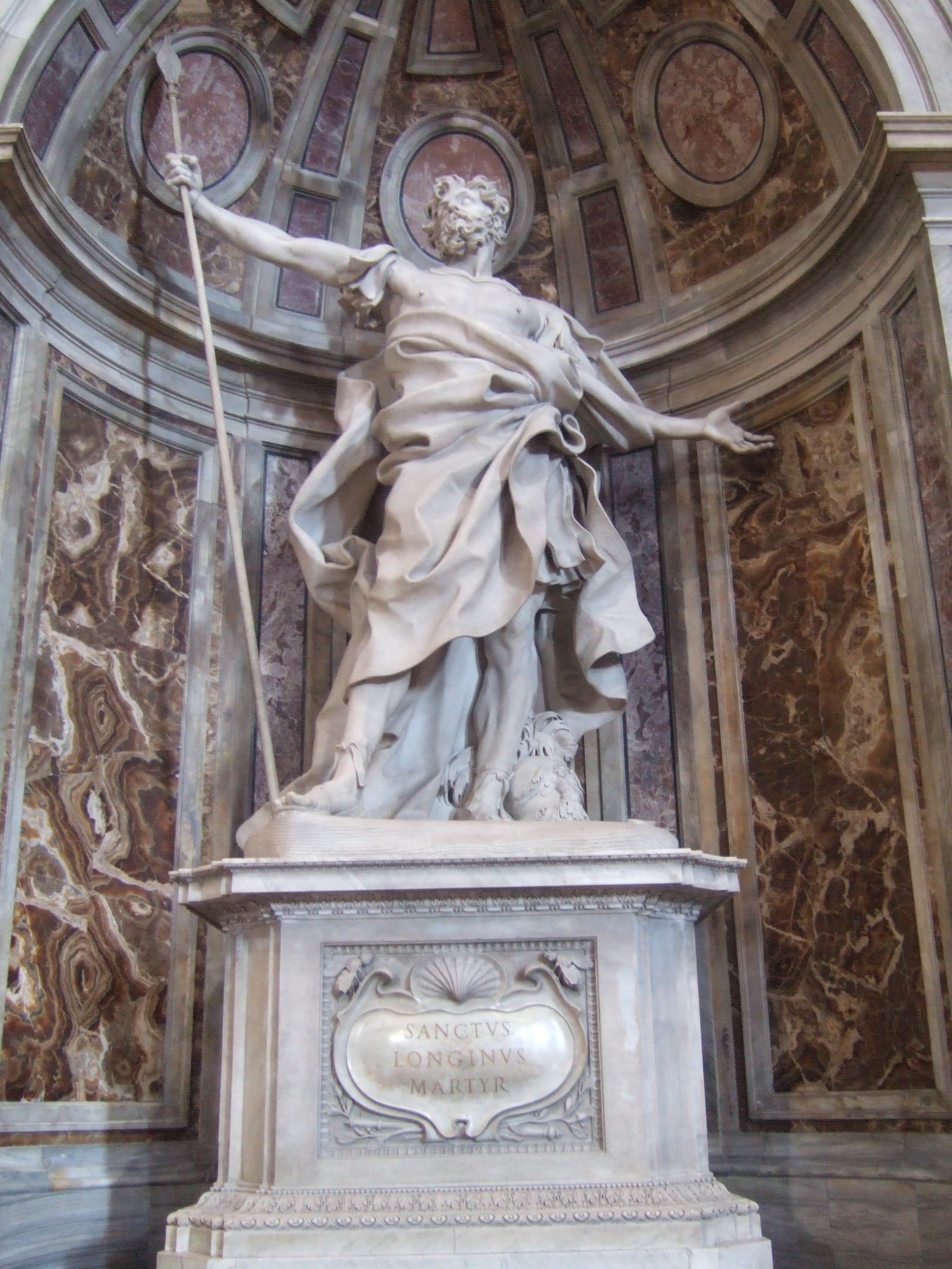
God will pour out a spirit of grace on Jerusalem and they will look on him whom they have pierced and mourn for him as for an only son; a soldier pierces Jesus' side and John says the scripture was thus fulfilled.
Moses strikes the rock and water gushes out for the people; Paul says 'that Rock was Christ', and from the pierced side of the crucified Christ flow blood and water.
God builds the woman from the side of Adam while he sleeps; the Fathers see the Church born from the side of the second Adam asleep in death on the cross, in the blood and water.
Jerusalem will mourn for the pierced one as one mourns an only son, family by family, the women apart; the daughters of Jerusalem weep for Jesus on the way to Calvary and the crowds return beating their breasts.
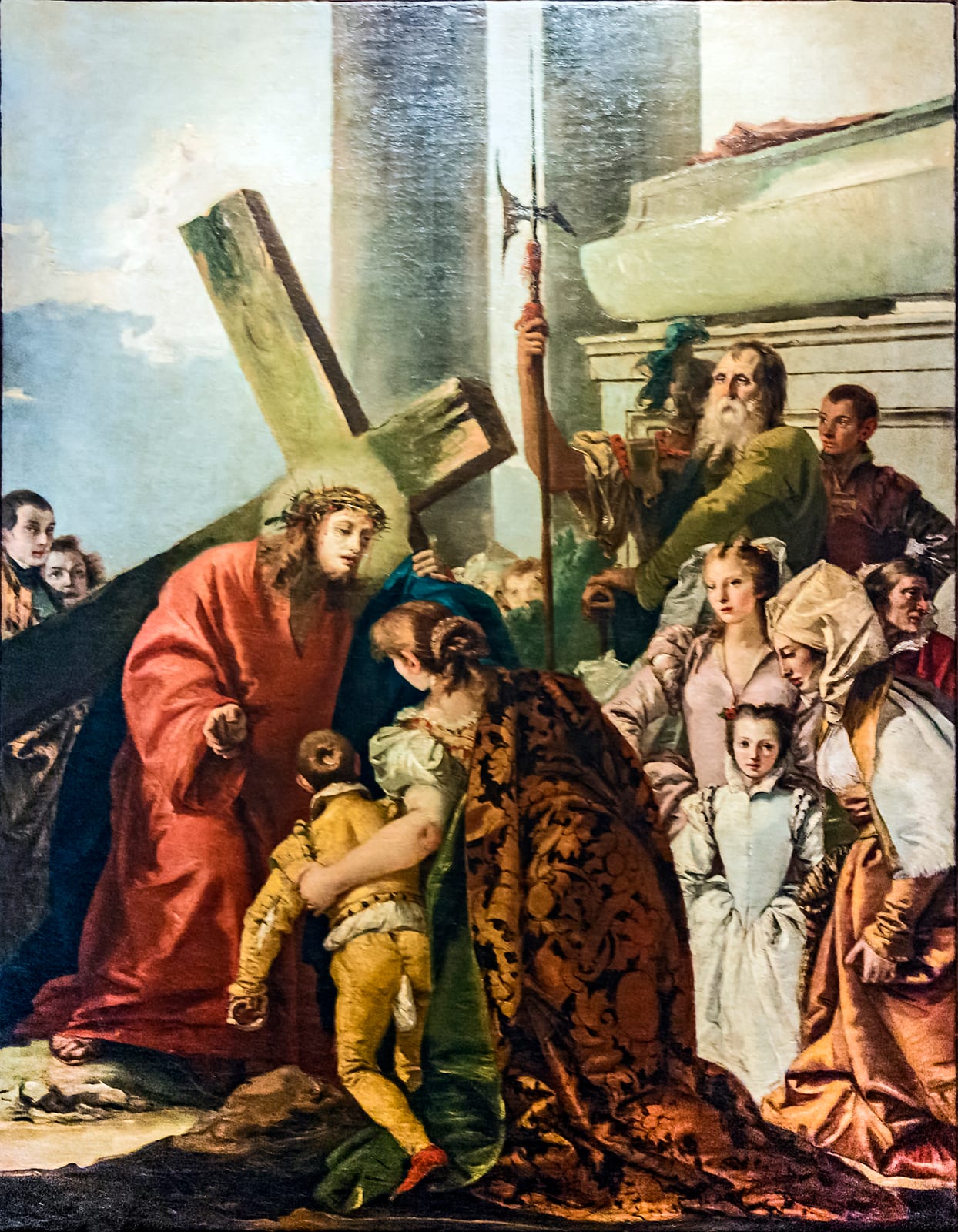
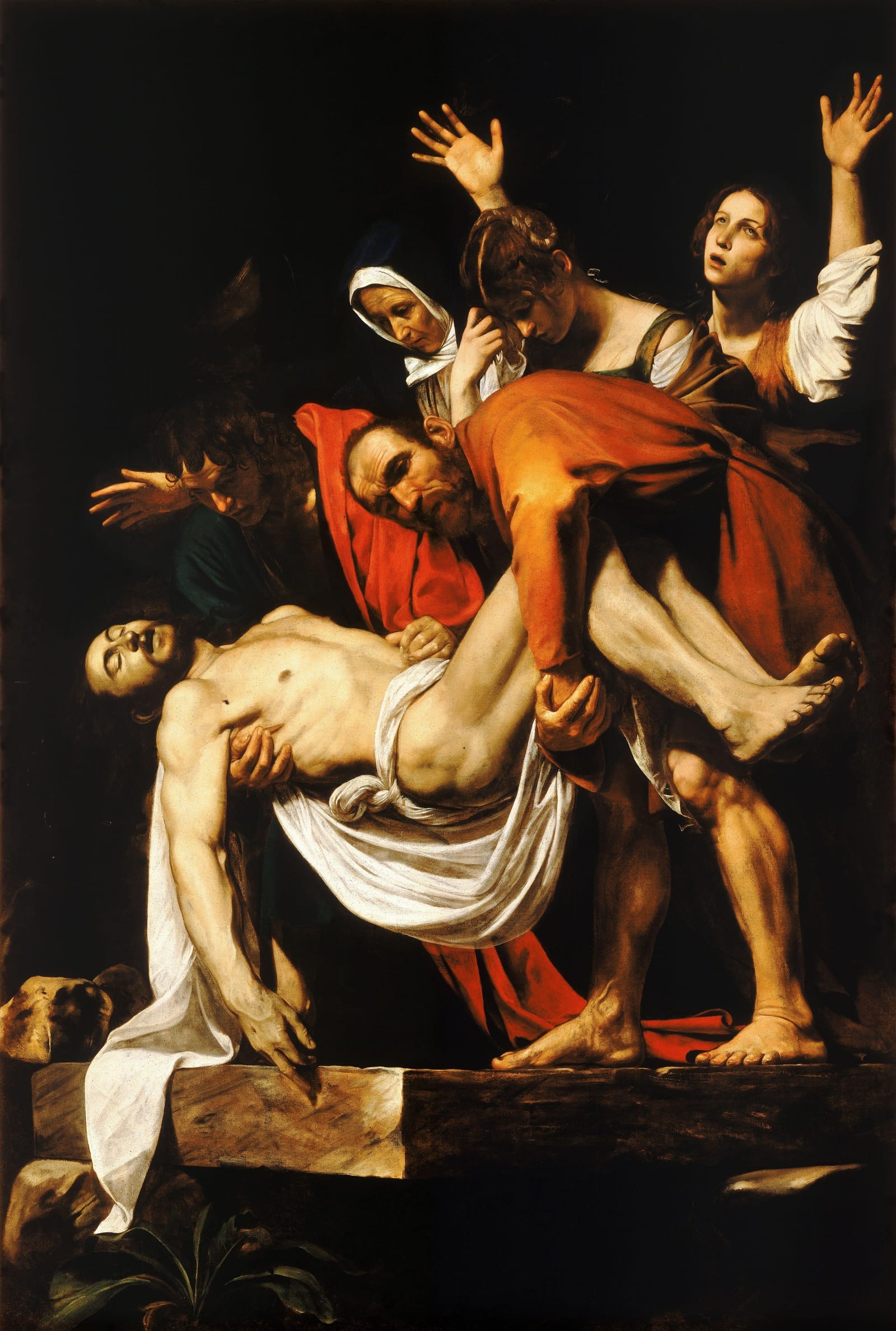
Though assigned a grave with the wicked, the Servant is with a rich man in his death; Joseph of Arimathea, a rich man, lays Jesus in his own new tomb.